
120 hr
River Gambia Wildlife & Stone Circles Adventure
Journey deep into rural Gambia to encounter wild hippos, chimpanzees, and ancient UNESCO stone circles
Reserve
Hand-picked by our editors — only the best 5 wildlife experiences from 18 reviewed.
Verified partners for every tour, free cancellation where available, and instant confirmation on every booking.
120 hr
Journey deep into rural Gambia to encounter wild hippos, chimpanzees, and ancient UNESCO stone circles
Reserve
7 hr
Drift through tranquil mangrove channels spotting dolphins, eagles, and monkeys on a full-day riverboat adventure
Reserve
7 hr
Full-day expedition through Gambia's wildlife sanctuaries, mangrove creeks, and coastal villages
ReservePrices from verified partners. Availability updates in real time at checkout. Free cancellation policies apply where shown.
The landmarks, rooms, and views travelers on this tour remember — all visible on a single visit.
Home to a protected chimpanzee population and diverse primates roaming free in a lush, riverine forest setting.
A pioneer initiative since 1979 for the care and reintroduction of orphaned primates in a controlled environment.
Calm, shaded waterways ideal for spotting hippos and Nile crocodiles surfacing near the banks.
A mix of gallery forests and swampy landscapes that support an incredibly rich variety of African bird species.
The essential gateway to the park, serving as the main departure point for all local boat excursions.
They complement each other; most visitors who do both call the chimpanzee rehabilitation sites within river gambia national park tours the more raw, natural experience compared to the managed safari setting of Fathala.
| Feature | Top pick River Gambia National Park | Fathala Wildlife Reserve |
|---|---|---|
Primary Wildlife |
Chimpanzees and hippos | |
Setting |
Riverine island forest | |
Accessibility |
Boat access only | |
Guided Structure |
Mandatory river boat tour | |
Wildlife Interaction |
Observational from water | |
Conservation Focus |
Primate rehabilitation sanctuary | |
| See tickets → |
Verdict: Choose river gambia national park tours tickets for an authentic boat-based ecosystem encounter, or select a Fathala wildlife tour if you prefer a structured land-based safari environment that requires no river gambia national park tours tour bookings to access the park's terrestrial trails.
Choose your ticket, select your date, and reserve in under two minutes. Secure checkout handled by our verified partner.
Instant confirmation by email, with a mobile voucher you can save offline. No printing, no queuing at a collection desk.
Arrive at the entrance, show your voucher on your phone, and walk in. Most tickets include priority or skip-the-line access.
Practical details for your visit straight from our verified partners — hours, access, rules, and how to get there.
Wear light, breathable clothing suitable for tropical heat and sun exposure. A hat and comfortable, closed-toe footwear are recommended for boat excursions and riverside movement.
Keep all personal items in waterproof bags to protect against river spray during boat transitions. Large luggage should be stored at your accommodation, as boats have limited space.
Ensure your camera gear is protected from moisture while on river gambia national park tours. Respect the wildlife by maintaining a quiet distance; flash photography is discouraged to avoid startling the animals.
The park consists of island terrain accessible exclusively via boat, which may present challenges for visitors with mobility aids. Please consult your tour operator regarding specific vessel capabilities.
River gambia national park tours are suitable for families, though long travel times to reach the park should be considered for young children. Wildlife spotting from the boat is generally engaging for all ages.
Carry sufficient bottled water to stay hydrated, as facilities within the park are limited. Some organized river gambia national park tours include a local lunch, but confirm this in advance.
Best time to go, insider tips, nearby landmarks, and the cancellation fine print — flip through to skim what matters to you.
Flexible, no hidden fees.
Cancellations for river gambia national park tours are generally eligible for a refund if requested 24 hours in advance. The 500 GMD conservation fee per person is typically non-refundable as it supports park programs.
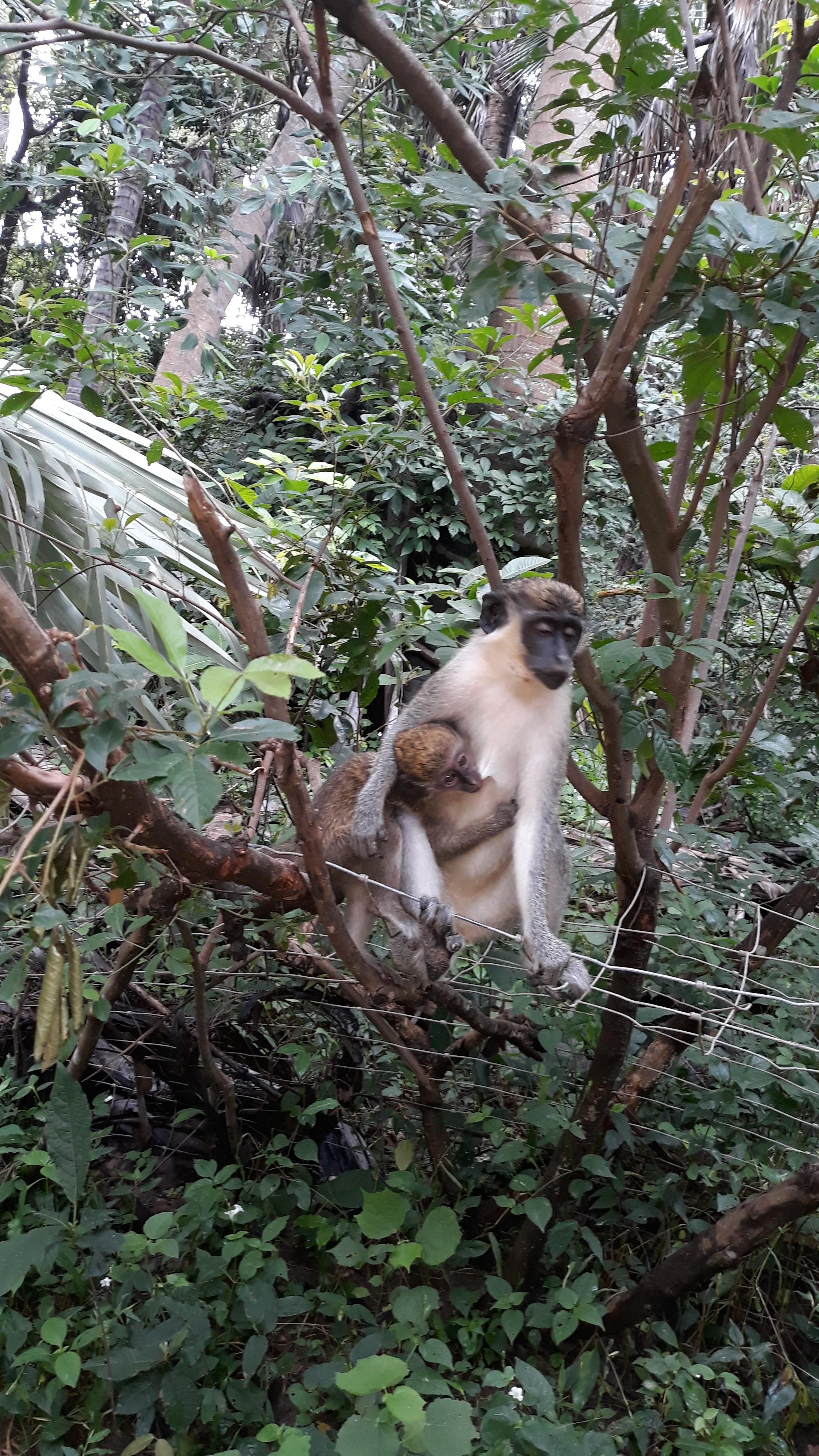
Established in 1978 across five disconnected islands straddling 580 square kilometres of the Gambia River's middle reach, River Gambia National Park was conceived as a rehabilitation sanctuary for orphaned chimpanzees before evolving into West Africa's most accessible riverine wildlife corridor. The park's archipelago structure — Baboon Islands at its heart — creates a mosaic of gallery forest, mangrove channel, and mudflat that shelters hippo pods numbering over sixty individuals, the region's densest concentration outside the Okavango Delta. River Gambia National Park tours operate exclusively by boat, a constraint imposed by the park's island geography and one that yields unexpected rewards. The water acts as a natural blind. Nile crocodiles bask on sandbars within twenty metres of passing vessels. Red colobus monkeys — a critically endangered primate found nowhere else in The Gambia — descend to drink at low tide, their rust-coloured coats vivid against the green wall of mahogany and kapok. Patas monkeys, green vervet troops, and Guinea baboons claim separate territories along the northern bank. Over three hundred bird species transit the corridor annually, including African fish eagles, pied kingfishers, and migratory ospreys that winter in the park's sheltered backwaters from October through March. The park anchors Niamina East District in the Central River Division, roughly 280 kilometres upstream from Banjul, accessible via the Trans-Gambia Highway and a series of dirt feeder roads that terminate at Kuntaur or Janjanbureh jetties. Most river gambia national park tours launch from Kuntaur's municipal dock, where fibreglass pirogues and aluminium pontoon boats depart Thursday through Sunday between 08:00 and 18:00. A 500 GMD conservation fee per person funds ranger patrols and anti-poaching initiatives coordinated with Senegal's Niokolo-Koba National Park, which shares a watershed boundary. The chimpanzee rehabilitation program, though no longer accepting new arrivals, maintains three habituated social groups totalling thirty-seven individuals on the central islands. Sightings remain opportunistic — dense canopy and the apes' natural wariness mean that fewer than one in five boat trips records visual contact — but their pant-hoots echo across the water most mornings, a reminder that this 08:00 to 10:00 arrival window captures the park at its most vocal and active before midday heat drives wildlife into cover.
"The water acts as a natural blind — crocodiles bask on sandbars within twenty metres of passing vessels."
A step-by-step walkthrough of the visit — what you'll see, how long each stage takes, and the details that matter.
You push off from Kuntaur jetty as the sun clears the eastern bank, the river's surface still cool and dark. Your guide cuts the outboard to idle as the first channel narrows, and within ten minutes a hippo surfaces thirty metres ahead, nostrils flaring, then sinks without a ripple. The boat drifts past a crocodile stretched motionless on a mudflat, its tail curled into the shallows. Mangrove roots arch over the water as the channel bends south. A troop of red colobus monkeys moves through the canopy above, their calls sharp and birdlike. Your guide points left — three patas monkeys cross a fallen log at the forest edge, long limbs silhouetted against pale bark. An African fish eagle lifts from a dead snag, its cry carrying over the current. The boat swings wide around Baboon Island's northern tip. You hear them before you see them: low hoots rising from the interior, then a crash of branches as a chimpanzee moves unseen through the crown layer. The guide raises a hand — silence. The calls fade. You wait, engine off, drifting with the current. Five minutes pass. The forest holds its secret. The boat turns downstream, retracing the silver thread back toward Kuntaur as the sun climbs and the river stills.
The park is open for visitors from Thursday to Sunday, 08:00–18:00.
Yes, the 500 GMD conservation fee per person is a required contribution to support local conservation and welfare programs.
You should aim to arrive between 08:00–10:00 to experience cooler temperatures and higher wildlife activity.
No, the park is closed to the public on Mondays through Wednesdays to prioritize conservation work.
No, walking on the islands is restricted; wildlife is observed from boats to protect the chimpanzee habitats.
Yes, many specialized operators offer birdwatching-focused river gambia national park tours.
Bring sunscreen, insect repellent, binoculars, and a waterproof bag for your gear.
Yes, families are welcome, but prepare for long travel distances to reach the park area.
Most visitors arrive via boat from Kuntaur after traveling from the coast, usually taking 4 hours.
Refund policies vary, but most providers offer free cancellation if requested at least 24 hours before your scheduled visit.